
A global research report by HCLTech indicates that integration has surpassed supply chain constraints as the primary challenge for the semiconductor industry. The study, which surveyed 300 senior leaders, highlights increasing dependency on semiconductors across industries, with 98% of enterprises more reliant now than three years ago and 99% expecting further increases. AI is also driving the strategic importance of semiconductor architecture.

Industry leaders at an AIMA panel discussion emphasised the need for businesses to quickly adapt to changing market conditions and invest in technologies like artificial intelligence to build resilience and achieve long-term growth. They highlighted the current era of uncertainty driven by geopolitical tensions, supply chain disruptions, and rapid regulatory changes, stressing that tactical responses are as crucial as long-term strategy.

Hyundai Motor India is set to outpace the broader passenger vehicle market, projecting an 8-10 per cent domestic sales growth in H2FY27, fueled by strategic launches of a new mid-size SUV and a dedicated electric vehicle, alongside increased production capacity.

Homegrown software company Zoho has launched Zia Chat, a unified AI interface designed to streamline business operations across various functions. Alongside this, Zoho announced its entry into vertical SaaS with seven industry-specific applications for sectors like retail, automotive, healthcare, and education, reinforcing its position as a 'Swadeshi' alternative to global tech giants.

Reliance Industries Ltd (RIL) has successfully raised a total of Rs 25,000 crore through domestic bond issues in September, including a recent Rs 13,000 crore 10-year bond at 7.90 per cent, as it prioritises funding certainty amidst expectations of a possible RBI rate hike and rising borrowing costs.

Telangana IT Minister D Sridhar Babu stated that Gen Z will be the driving force behind the next wave of AI and green innovation. He urged young innovators to use their skills to solve real-world challenges, particularly in sustainability. The launch of the Green Skills and Applied AI Centre of Excellence in Hyderabad, a partnership between Telangana's IT Ministry, Microsoft, 1M1B, and MeitY Startup Hub, aims to equip graduates with industry-relevant skills in AI, green pharma, solar energy, EVs, and wind energy, with 100 job offers already announced.

India's manufacturing and services sectors are set to create over 35 crore new jobs by 2030, necessitating urgent skilling and industry-academia collaboration. Key sectors like automotive, logistics, telecom, clean energy, and textiles will drive this growth, highlighting the need for competency-driven learning to prepare the workforce.

Sivakasi, India's fireworks capital, is eyeing global markets as green crackers, rising demand and interest from overseas buyers offer a chance to challenge China's dominance.

A strike by Dakshin Haryana Bijli Vitran Nigam (DHBVN) workers has caused widespread power outages across Gurugram, Faridabad, and Nuh districts since Wednesday night. Thousands of residents and industrial units are affected, leading to significant economic losses and disruption of essential services like water supply. Talks between authorities and striking employees have so far been inconclusive.

Bank credit to industry in India surged by 20 per cent year-on-year in July, significantly accelerating from the previous year, driven by strong expansion in sectors like engineering, gems and jewellery, and petroleum-related industries, according to the Reserve Bank of India (RBI). However, growth in gold loans, while still expanding, saw a sharp moderation.

India's industrial production increased by 6.7 per cent in July 2026, primarily driven by a 7.3 per cent growth in the manufacturing sector and a strong 8.7 per cent rise in electricity and gas supply, despite a contraction in the mining sector.

India's core infrastructure industries recorded a significant growth of 7.9 per cent in September 2026, up from 3.1 per cent in the previous year, primarily fuelled by robust performances in iron ore, electricity, and cement production.

'Attacks happen with an agenda or reason. I don't know what the reason here is.'

Rajkot police have arrested 17 individuals operating as doctors without valid medical degrees in rural and industrial areas. The arrests were made during a special drive, with police seizing medicines and equipment, and vowing to continue the crackdown.

Sunday's shooting incident targeting Tiger Shroff have rekindled memories of the film industry's dark past, when crime syndicates like Dawood Ibrahim's D-Company and Abu Salem's gang exerted significant influence through extortion, violence, and money laundering.
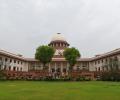
The Supreme Court, in a 6:3 majority verdict, has ruled that the expansive, labour-friendly definition of 'industry' from its 1978 Bangalore Water Supply and Sewerage Board judgement will not be used for interpreting the Industrial Relations Code of 2020. However, the 'triple test' from the 1978 verdict will still apply to pending cases under the now-repealed 1947 Industrial Disputes Act.

Indian benchmark equity indices, Sensex and Nifty, significantly recovered from sharp early losses, driven by buying in State Bank of India and Reliance Industries, alongside fresh foreign fund inflows, despite declines in Axis Bank and HDFC Bank.

The Federation of Western India Cine Employees (FWICE) has condemned the firing incident on Bollywood actor Tiger Shroff's car in Mumbai, raising concerns about the safety of film personalities. The incident, which injured Shroff's driver and an autorickshaw driver, is the second such attack on a film personality, prompting calls for immediate investigation and action from authorities. The Lawrence Bishnoi gang has reportedly claimed responsibility, and three suspects were detained on Monday.

Indian equity benchmarks Sensex and Nifty rallied up to 1 per cent in early trade, driven by strong performance in IT stocks, Reliance Industries, and favourable global market sentiment, rebounding from previous losses.
A new Rs 6,000 crore integrated phenol and acetone plant, India's largest, has been inaugurated in Haldia, West Bengal. Developed by Adperma Private Limited, a subsidiary of Haldia Petrochemicals Limited (HPL), the facility aims to reduce India's reliance on imported industrial chemicals and boost the domestic specialty chemicals sector. West Bengal's Chief Minister announced a new industrial policy following the inauguration.

Jio Platforms' initial public offering has garnered an overwhelming institutional demand of approximately Rs 2.5 lakh crore, significantly exceeding its Rs 8,110-crore anchor book, with global and domestic investors vying for a stake in the Reliance Industries subsidiary.

US Secretary of State Marco Rubio visited Reliance Industries' Jamnagar refinery, a day after calling India a crude oil refining 'superpower', and met with top Indian business leaders Gautam Adani and N Chandrasekaran to advance bilateral ties in energy, trade, investment, and defence.

'This is a never-before-seen phenomenon.' 'Instead of violence relating to extortion, contract killings, settlements etc for the first time ever, they seem to be wanting to kill for vanity and pride.'

WazirX founder Nischal Shetty stated, "We have outdone ourselves, but it is a journey we are still on, and there is a long way to go," reflecting on the cryptocurrency exchange's year-long journey since restarting operations after a cyberattack and restructuring.

'These attempts to intimidate people will not be tolerated, and we will put an end to this hooliganism.'

'... but runs with the rigour and discipline of a large enterprise.'

Jio Platforms Ltd's Rs 30,213-crore initial public offering was subscribed 3.01 times, attracting approximately Rs 66,500 crore in public bids, with qualified institutional buyers oversubscribing their portion by 9.02 times, while retail investor demand remained under-subscribed at 0.68 times.

Gangster Anil Pandit, allegedly operating from the US, has emerged as a key suspect in the firing incident involving Bollywood actor Tiger Shroff. Police are investigating his links to over a dozen extortion and targeted attack cases across Haryana and Delhi, and his network's use of messaging apps to coordinate shooters. Pandit also allegedly claimed responsibility for the incident and issued threats related to Salman Khan.
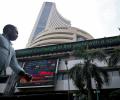
Indian equity benchmarks, the Sensex and Nifty, opened higher on Friday, driven by a strong rally in IT stocks, despite a significant overnight decline in US technology shares and broader Asian markets. Experts anticipate further market support from falling US bond yields, a strengthening rupee, and a substantial liquidity inflow following the Jio Platforms IPO allotment. Track

'I didn't know whether I simply loved acting, whether I was good at it or whether I wanted to pursue it professionally. So, about 10 years ago, I started auditioning just to see how far I could go.'

'My brother Daler Mehndi does not drink alcohol. He has been unwell for the past two years and is still recovering, yet he continues to perform.'

BrahMos Aerospace expects to develop the first prototype of its next-generation BrahMos-NG missile by 2027 or 2028, while a missile with a range of 1,500 km remains part of its future roadmap and is currently at the conceptual stage, the company's CEO and managing director Dr Jaiteerth Joshi said.

Domestic passenger vehicle dispatches in India increased by 21.8 per cent year-on-year to 4,54,574 units in September, while two-wheeler sales rose 13.5 per cent to 24.63 lakh units, according to SIAM data.

Reliance Industries Ltd (RIL) has publicly welcomed competition from Elon Musk's Starlink in the satellite communications sector, asserting that all players, including Jio, must abide by Indian laws and policies.
IIT Hyderabad and Japan's Mie University have signed MoUs to foster academic exchanges and joint research, with a strong focus on semiconductors and digital technologies. This collaboration aims to develop skilled talent and strengthen the semiconductor ecosystem in both countries.
The Qualified Institutional Buyers (QIBs) portion of the Jio Platforms IPO was fully subscribed at over 2x demand within minutes of its issue opening on Wednesday, indicating strong institutional interest in India's largest public issue.
'It is possible that the attackers might have been ordered not to kill.'

'Indian IT firms must hire and train more Americans while reducing dependence on sending employees from India to the US.'

Indian benchmark stock indices, Sensex and Nifty, rallied significantly, with Sensex jumping over 1,500 points and Nifty reaching a nearly three-week high, driven by strong buying in banking, IT, and Reliance Industries stocks, alongside easing crude oil prices.

Indian benchmark indices Sensex and Nifty traded lower in early sessions due to profit-taking and significant foreign institutional investor (FII) outflows, despite strong performance from IT stocks like Tech Mahindra. Track Sensex, Nifty on October 16.
